
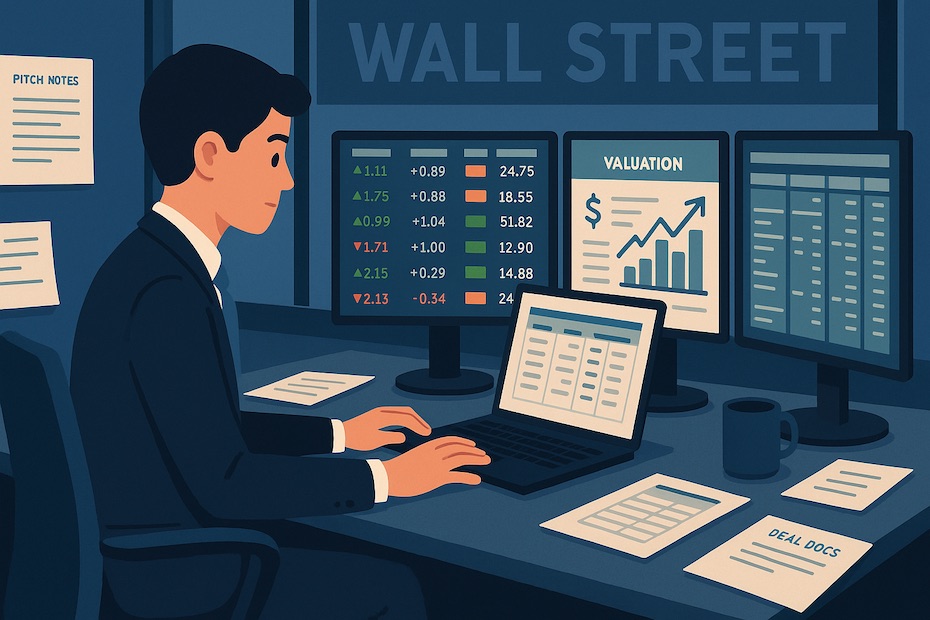
Learning directly from Wall Street legends instills professional instincts that outlast any market cycle.
This article draws from real-world Wall Street apprenticeship experiences to highlight actionable, enduring lessons—execution precision, risk calibration, client communication, and intellectual discipline. If you’re early in your finance career or training someone who is, this will show you what still matters—and what to implement immediately.
What were the most valuable takeaways from early Wall Street apprenticeships?
The most durable lesson you inherit is execution excellence under pressure.
Your value on a trading floor or in an investment committee is determined by how consistently you deliver—whether under market chaos or in front of demanding clients. Early apprenticeships instill that urgency. When you work for professionals who ran billion-dollar books, you’re expected to complete work with accuracy, not excuses. The tolerance for delay or sloppiness is zero.
Execution precision isn’t just about numbers. It includes how you write emails, summarize risk, label models, and document assumptions. If you learn that early from someone who’s held senior buy-side or sell-side roles, you carry that edge into every job you take.
How did early mentors influence risk and decision-making?
They modeled how to absorb uncertainty and act anyway.
Most junior professionals spend years waiting for perfect information before making a move. Apprenticing under Wall Street titans strips that habit. You observe how they make 70% confident decisions under time pressure—and immediately re-optimize if they’re wrong. That feedback loop is fast, direct, and brutally honest.
You’re not trained to be reckless. You’re trained to be accountable. One managing director once told a team of analysts: “You’re paid to make a call—not to report news.” That’s the mindset you develop when decisions carry weight, and the market doesn’t wait for you.
Why does early exposure to client communication matter?
It teaches you how to translate complexity into conviction.
Senior finance professionals spend more time explaining their thinking than executing it. If you sit in client calls early—watching how they articulate risk scenarios, macro views, or earnings forecasts—you learn that language. And language is leverage in finance.
You’ll also notice how top mentors listen. They don’t overpower a room with facts. They extract what the client needs, tailor the response, and deliver confidence without arrogance. Those are soft skills you don’t learn in a textbook—and they’re indispensable in capital markets, asset management, and venture.
What work habits did you internalize as an apprentice?
Three stand out: obsessive preparation, precision under deadlines, and silence as a strategic tool.
Being prepared means reading every footnote, not just the summary. It means double-checking formulas, validating comps, and stress-testing assumptions before presenting them.
Precision under deadlines builds stamina. No one waits for your model when a client’s on the line. Apprenticeships teach you to perform under time compression. You don’t “try” to meet a deadline—you hit it.
Silence as a strategic tool means learning when not to speak. You watch senior leaders pause, listen, and deliver the right sentence at the right moment. You don’t need to fill space to look smart—you need to bring signal.
How does your network evolve from those early years?
Apprenticeships expand your strategic circle—not just your social one.
Most professionals early in their career chase connections with peers. But if you train under senior professionals who’ve run hedge funds, IPO desks, or growth equity platforms, your network compounds in quality. You get access to people who influence deals, shape capital flow, and spot trends before they become mainstream.
More importantly, those mentors recommend you. They watch how you handle stress and deliver outcomes—and they remember. Your network becomes a product of your competence, not your charisma.
What mindsets separate elite juniors from average ones?
Extreme ownership, curiosity without ego, and readiness to earn trust every day.
You don’t get handed important work—you grow into it. Apprentices who scale fast are those who solve problems before they’re asked, show initiative without overstepping, and absorb feedback without defensiveness.
One of the most underrated traits is how you handle being wrong. Titans notice whether you shift blame or own mistakes. Owning a wrong call and fixing it fast is a sign of maturity they’ll reward. That’s what shapes promotable talent.
Why do these takeaways still matter in today’s tech-driven finance world?
Technology amplifies speed, but human judgment still drives outcomes.
Whether you’re using AI for financial modeling or deploying algorithmic strategies, the underlying rules haven’t changed: You need sharp thinking, timely execution, and clear communication. Apprenticeships reinforce those fundamentals—regardless of platform or cycle.
The finance world now demands faster reactions, deeper specialization, and global awareness. But the disciplines you learn from veterans—clarity, speed, trust, and discipline—still outperform code alone. Judgment remains the final edge.
What to remember from your Wall Street apprenticeship
- Execute without error under pressure
- Make decisions with limited data
- Translate complexity into client clarity
- Prepare deeply, deliver precisely
- Let performance build your network
In Conclusion
If you’ve trained under high-performance Wall Street leaders, you carry an edge that no market trend can erase. What you learn—how to decide, how to deliver, and how to lead—becomes your lifelong equity. And if you’re mentoring someone now, make sure they learn those same fundamentals. They still matter more than ever.
If you’re charting your own path in finance or mentoring someone who is, follow this LinkedIn profile to see how early apprenticeship can evolve into long-term leadership. It’s not about replicating a resume—it’s about absorbing the mindset.