
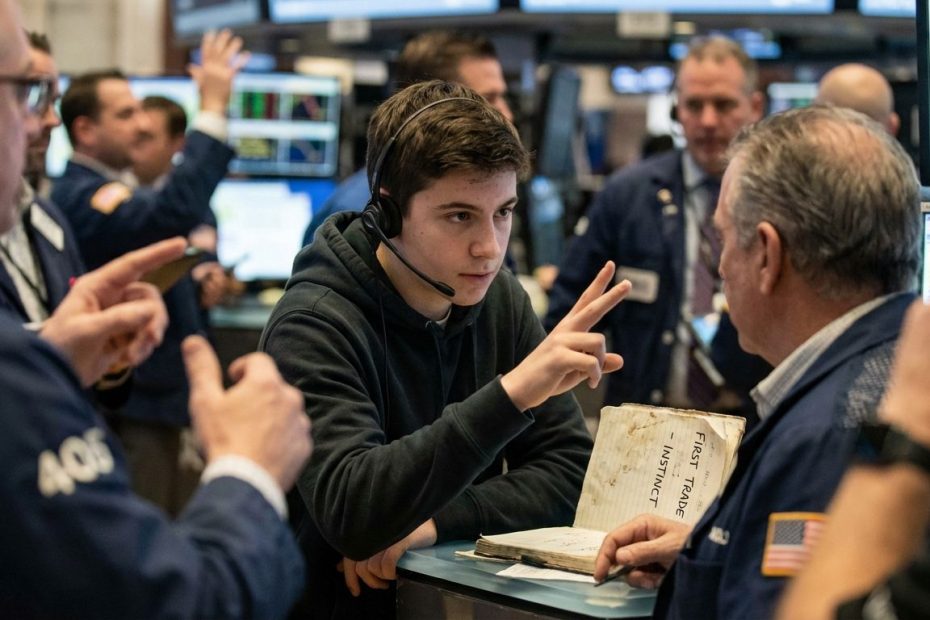
You navigated a trading pit by processing human signals faster than anyone else in the ring, then converting that read into a clean, verifiable order that the crowd would honor. A teenager could survive a first trade without years of screen time by mastering the pit’s few non-negotiables: position, eye contact, hand language, and fast arithmetic under pressure.
This guide breaks down what a “Wall Street pit” actually was, how open-outcry worked at floor level, why instinct mattered more than job titles, and how the few surviving pits still operate alongside electronic markets. You also get a practical bridge to modern teen investing, including what the 2024 Schwab Modern Wealth Survey reported about when Gen Z starts investing, and what a custodial account typically solves for families in the U.S.
What Was A “Wall Street Pit,” And What Did It Feel Like In The First 60 Seconds?
A “pit” was a stepped, amphitheater-style trading area designed to compress information, not to look dramatic on camera. You stood inside a tight crowd where bids and offers moved through voices, hand signals, and reputation, then settled into trades that could be confirmed and recorded. The geometry mattered: steps gave sightlines, the center pulled liquidity, and the perimeter let clerks relay fills and runners move tickets. That physical design solved a problem screens now solve with an order book: letting everyone see price discovery happening in real time.
Your first minute in a pit was sensory triage. You trained your eyes to find the loudest price level, your ears to separate the broker’s order from the locals’ noise, and your body to hold ground without escalating contact. A teenager who lasted learned one truth quickly: confidence in the pit came from clarity, not volume. When your signals were clean and your numbers were fast, the crowd treated you as workable flow, not a distraction.
That first trade rarely started with a heroic call; it started with getting slotted into a place where fills were possible. You learned where the regulars stood, who controlled size, who played small and fast, and who only showed up when real business hit the ring. That “map” was not written down, and a younger trader built it by watching the same faces react to the same prints, day after day, until the reactions became predictable.
How Did Open-Outcry Trading Actually Work When Everyone Was Shouting At Once?
Open-outcry worked because the chaos had rules and those rules were enforced socially and operationally. A bid or offer had to be clear enough for others to accept, and a trade had to be confirmable quickly enough for clerks and brokers to record it. Price and quantity were communicated in a standardized sequence, with the pit’s hand language acting as a redundancy layer when the noise drowned out voices. When the market moved fast, the best operators relied on repeatable mechanics rather than personal style.
Hand signaling was not optional; it was the pit’s bandwidth. Palms facing inward signaled buying, palms facing outward signaled selling, and numbers were conveyed through agreed gestures that reduced ambiguity at distance. You used those signals to cut through bodies and jackets when you could not get close enough to hear or when the broker needed a quick, clean response. A teenager who learned the signals early gained a shortcut into participation, since the crowd could “read” intent even before a voice broke through.
Execution was also about timing, not just direction. You watched who was urgent, who was fishing, who was hedging, and who was trying to move a level by showing size. You also learned that fills came from being seen as reliable: showing up at the same spot, quoting consistently, honoring trades without drama, and confirming quickly. Instinct in that environment looked like fast pattern recognition backed by disciplined habits.
What Did “Instinct” Mean In A Pit, And Why Did It Beat Experience On A First Trade?
In a pit, instinct meant reading intent, not predicting headlines. You watched shoulders turn, hands flash, voices tighten, and groups suddenly compress around a price, then you decided whether liquidity was real or manufactured. A seasoned trader had more stored patterns, but a sharp teenager could compete on the first trade by focusing on the immediate: who needed a fill now, where the next price was likely to print, and whether the crowd’s posture supported that move. That was not magic; it was attention under stress.
Experience helped when the market regime shifted or when a position needed active management, but your first trade rarely required genius. It required executing the basic play without hesitation: receive the order, quote a market, get hit or lift, confirm quantity and price, then get the trade written down correctly. A young trader who could do that cleanly earned something more valuable than praise: access. Once the brokers believed you could be counted on, you got shown better flow, and your learning curve accelerated.
Instinct also protected you from the most common early mistake: chasing noise. In a pit, noise had a physical signature, loud voices with no one actually trading, hands flashing without follow-through, sudden bursts that died at the same price. You learned to wait for the one behavior that mattered, real counterparties stepping into the level and staying there. That discipline looked like patience, but it was really an execution filter.
How Could A Teenager Get Onto The Floor, And What Work Actually Put You Close To Trades?
Teenagers rarely entered as “traders” in any official sense; they entered close to the action through support work that earned trust. Floor ecosystems ran on clerks, runners, phone support, booth tasks, and operational errands that kept brokers and locals functioning. Those roles mattered because proximity built competence: you heard fills, watched disputes get resolved, learned who honored markets, and internalized the rhythm of the ring. You also learned the paperwork discipline that prevented errors from becoming expensive.
The practical advantage of starting in a support role was speed of feedback. When you carried messages, handled tickets, or assisted a booth, you saw what “good” looked like in real time and you saw what got people cut off. A teenager with strong instincts used that exposure to build a playbook: keep numbers simple, confirm everything, and never create confusion. That skill stack looked unglamorous, yet it was the difference between being tolerated and being trusted.
That path also taught the real hierarchy of the floor. Job titles mattered less than who controlled relationships and who managed risk well enough to stay in the pit year after year. You watched veterans defend a level without panic, step aside when flow turned toxic, and re-enter when the market stabilized. That behavior shaped the teenage operator’s instinct: risk control was not a speech, it was a stance.
Do Trading Pits Still Exist In 2026, Or Is Everything Electronic Now?
Most volume moved to screens years ago, yet a small number of open-outcry pits still operate, especially in options where complex orders benefit from live negotiation. Chicago remains a key venue for that blend, with floor trading persisting in products where crowd interaction can tighten execution for multi-leg, size-sensitive, or less straightforward orders. That survival is not nostalgia; it is a specialized workflow that still attracts firms willing to invest in floor operations.
In August 2025, Bloomberg reported that Prime Trading established a floor operation at Cboe, and noted Cboe’s 2022 open-outcry floor revamp as part of the renewed investment case. The report described the ongoing need for in-person trading to connect buyers and sellers on more complex orders, even while most contracts trade electronically. You should read that as a tactical decision: when execution quality is the product, the floor can still be a tool.
For a modern reader, the pit’s endurance clarifies what “human liquidity” really means. Electronic markets excel at matching simple flow at scale, yet complex orders often need negotiation, signaling, and quick adjustments that traders still handle well face-to-face. If a teenager is learning today, the main lesson is not to romanticize the floor, it is to respect microstructure. Markets reward the participant who understands where liquidity forms, how it disappears, and how to confirm fills with zero ambiguity.
How Does A Teen’s “First Trade” Work Today, And What Does The Data Say About Gen Z Starting Early?
Today, a teen’s first trade is usually a screen-based order routed through a broker, and the barrier is less about physical access and more about account structure, supervision, and decision hygiene. The tools look simple, yet the skill requirement stays high: clear order entry, awareness of spreads and liquidity, and discipline around position sizing. The same instinct that helped in a pit now shows up as fast filtering, ignoring hype, and acting only when a plan is measurable.
Real-world data shows younger investors are starting earlier. Charles Schwab’s 2024 Modern Wealth Survey reported that Gen Z began saving and investing at an average age of 19, compared with 35 for Boomers. The press release also reported investing participation rates by generation, with 45% of Gen Z investing “today” in the survey sample, versus 63% for Boomers. The survey was conducted online by Logica Research from March 4 to March 18, 2024, and the press release date was June 12, 2024.
That gap between starting earlier and participating less tells you what is happening on the ground. Access is easier, yet staying invested, staying consistent, and avoiding impulsive moves remains the separating factor. If a teen wants the pit-style edge in a screen market, the work is the same: build repeatable mechanics, measure outcomes, and keep emotions from driving order entry.
What Account Structure Do You Use If You’re Under 18 In The U.S. And Want To Place Trades?
In the U.S., a minor typically uses an adult-managed structure, most commonly a custodial account, to invest. The adult serves as custodian and controls the account until the beneficiary reaches the state’s age of termination, at which point ownership must be transferred. That structure solves the operational problem of who can open and manage the brokerage relationship while keeping the assets designated for the child.
At the practical level, the account choice shapes behavior. A custodial account can support long-term investing and education because it is easier to implement simple, repeatable purchases, then review results without constant strategy changes. It also sets clearer guardrails: statements arrive, performance can be tracked, and the “why” behind trades can be documented. That documentation becomes the modern equivalent of pit tickets and clerk sheets, a record that forces honesty about what worked and what did not.
Some readers also care about planning numbers. Fidelity’s custodial account page states that up to $19,000 per individual, or $38,000 for a married couple, can be contributed free of gift tax in 2026, and it also notes specific 2026 figures tied to how a portion of custodial-account earnings may be taxed. Those details matter less than the behavioral point: a teen’s early advantage comes from consistency and time, not constant activity.
How Did Open-Outcry Trading Work In A Wall Street-Style Pit?
Traders shouted bids/offers, used standardized hand signals for buy/sell and size, matched trades in seconds, then confirmed price and quantity for recording.
Build Your First-Trade Edge Without Needing A Floor Badge
You earn a real first-trade edge the same way floor traders earned it: reduce ambiguity, execute cleanly, and keep records that force accountability. The pit rewarded fast reads of people and price; modern markets reward fast reads of liquidity, spreads, and your own behavior. Gen Z’s earlier start, with an average investing age of 19 in Schwab’s 2024 survey, gives time as an advantage, yet time only compounds when actions stay consistent. If a teen is the target reader, the win comes from mastering basics that never change: clear order intent, controlled sizing, and review of outcomes without excuses.
References
- Chicago Board of Trade (Wikipedia)
- Hand Signaling (Open Outcry) (Wikipedia)
- Prop Firm Prime Trading Enters Chicago S&P 500 Options Pit (Bloomberg, Aug 20, 2025)
- 2024 Schwab Modern Wealth Survey Press Release (Charles Schwab, Jun 12, 2024)
- Why Gen Z Is Investing Earlier Than Millennials Did (CNBC, Jun 14, 2024)
- Custodial Account (Fidelity).