
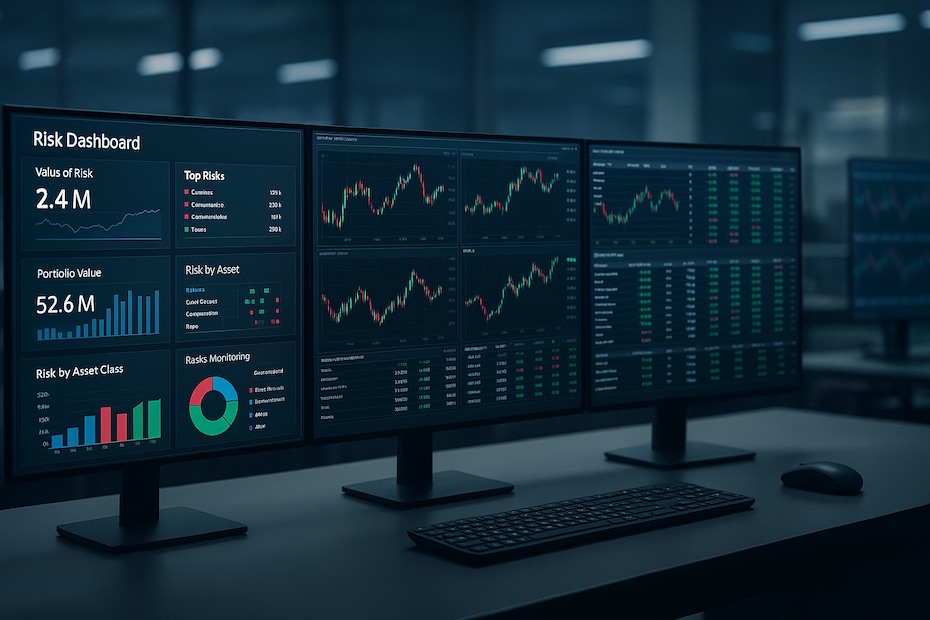
Risk management today draws directly from the discipline, controls, and loss-containment habits built on 1980s trading floors, where speed, leverage, and volatility forced firms to formalize how risk is identified, measured, and controlled. The tools look modern, yet the operating logic remains grounded in those early market lessons.
This article breaks down how risk management practices took shape during the 1980s and why they still guide executive decisions today. You’ll see how market crashes, early quantitative tools, and trader accountability shaped the systems you rely on now. The focus stays practical, data-anchored, and aligned with how risk leaders operate in real organizations.
What does modern risk management actually mean today?
Modern risk management refers to the structured process of identifying exposures, measuring potential losses, and enforcing controls before losses threaten capital or continuity. You apply it across market risk, credit risk, liquidity risk, and operational risk using defined limits and reporting discipline.
What changed since the 1980s is not the goal, but the execution speed. Trading desks then relied on end-of-day reports and manual reconciliation. Today, you operate with intraday monitoring, automated alerts, and centralized oversight. The expectation stays the same: risk remains visible, measured, and acted on without delay.
This definition reflects how senior leaders view risk as an operating function rather than a compliance checkbox. Risk decisions shape position sizing, capital allocation, and growth plans every day.
How did 1980s trading floors influence risk discipline?
1980s trading floors were intense environments driven by human judgment, physical presence, and growing leverage. As financial instruments multiplied, firms learned quickly that unmanaged exposure could wipe out weeks of gains in minutes.
Risk discipline emerged through necessity. Position limits, stop-loss rules, and daily profit-and-loss reporting became standard. You still rely on these controls, even though software now enforces them automatically. The floor culture taught one clear lesson: unmanaged risk scales faster than profit.
Senior managers demanded visibility. Traders were required to explain exposures and defend positions using numbers, not instinct. That cultural shift created accountability models still used by executive risk committees today.
Why did the 1987 market crash change risk oversight permanently?
The October 1987 market crash erased over 20 percent of U.S. equity value in a single day. That event exposed how automated selling and portfolio insurance strategies could amplify losses when markets move together.
Before 1987, risk oversight often lagged market activity. After the crash, firms implemented real-time monitoring, hard loss limits, and trading halts to prevent uncontrolled cascades. You still see these protections through circuit breakers and volatility pauses across global exchanges.
This moment changed how leadership viewed systemic exposure. Risk could no longer be evaluated desk by desk. Correlation risk and liquidity stress entered executive decision-making, shaping the cross-portfolio oversight you use now.
What quantitative risk tools emerged from the 1980s?
The late 1980s introduced standardized risk measurement through early quantitative models. RiskMetrics, released in 1989, gave firms a shared method to estimate potential losses using volatility and correlation data.
This allowed senior leaders to compare risk across asset classes using a common scale. You now use refined versions of these methods through Value-at-Risk, Expected Shortfall, and scenario analysis. The math improved, yet the principle stayed consistent: risk must be measurable to be managed.
Quantitative tools shifted conversations inside firms. Decisions moved from “how confident does this feel” to “how much capital is at risk under defined conditions.” That shift remains central to executive risk governance.
How did early technology change risk monitoring?
Personal computers entered trading rooms in the 1980s, replacing handwritten position sheets and calculators. That shift enabled faster aggregation of exposures and earlier detection of limit breaches.
Risk teams gained centralized views across desks. Instead of fragmented oversight, leadership could see firm-wide exposure to interest rates, currencies, and equity movements. You now operate with global dashboards that trace directly back to these early systems.
Technology also enabled program trading, which introduced new risks. Automated execution increased speed but required firm-level safeguards. That balance between automation and control remains one of your core risk leadership responsibilities today.
Which 1980s risk controls still exist in modern firms?
Position limits remain foundational. Where traders once received verbal warnings, systems now block orders automatically once limits are reached. The control mechanism changed, not the rule.
Daily risk reporting persists as a non-negotiable practice. You review exposure summaries, stress results, and loss thresholds each morning because leadership demanded that cadence decades ago.
Independent risk oversight also survives. The separation between trading and risk monitoring began in the 1980s to prevent conflicts. Modern risk committees and independent control functions extend that same principle at enterprise scale.
How do executive leaders apply these lessons today?
Executive leaders use risk data to guide capital deployment rather than react to losses. The discipline learned on 1980s floors informs how you evaluate expansion, leverage, and new product launches.
Risk appetite statements formalize tolerance levels. That concept grew from informal desk limits into enterprise-wide boundaries approved at board level. You rely on those limits to align growth with resilience.
Decision speed also matters. The 1980s taught that delayed response multiplies losses. Modern leaders empower teams with authority and data access so action happens before exposure escalates.
Why do human judgment and discipline still matter?
Models support decisions, yet judgment determines outcomes. The 1980s reinforced that overconfidence and ignored warnings create systemic failures.
You still train teams to respect limits, question assumptions, and escalate concerns early. Automated tools support discipline but do not replace responsibility. Losses accelerate when teams bypass controls.
This balance between quantitative measurement and behavioral discipline defines effective risk leadership today. The tools advanced, yet accountability remains human.
How does risk management support long-term performance?
Risk management protects optionality. Firms that survived multiple market cycles did so by preserving capital during drawdowns. That principle emerged clearly during volatile periods in the 1980s.
You use risk controls to stay active when competitors retreat. Stable liquidity, controlled leverage, and disciplined exposure allow firms to invest during market stress rather than exit.
This long-term view separates performance-driven risk management from short-term speculation. The 1980s proved that endurance wins over unchecked aggression.
Risk Management Lessons from the 1980s
- enforce position and loss limits
- measure risk using consistent quantitative metrics
- monitor exposure continuously, not periodically
- balance automation with firm-level controls
Lead with Discipline, Not Reaction
Risk management today succeeds when you treat it as an operating system rather than a defensive layer. The 1980s trading floors proved that visibility, limits, and accountability preserve both capital and credibility. Market crashes forced firms to professionalize risk oversight, and those lessons remain active inside modern dashboards and executive reviews. When you apply these principles consistently, you gain flexibility during stress rather than scrambling for control. That discipline supports growth, resilience, and leadership confidence across market cycles.
If this breakdown sharpened how you think about market exposure and control, follow my website to explore deeper analysis on risk, markets, and executive decision-making across financial cycles.