
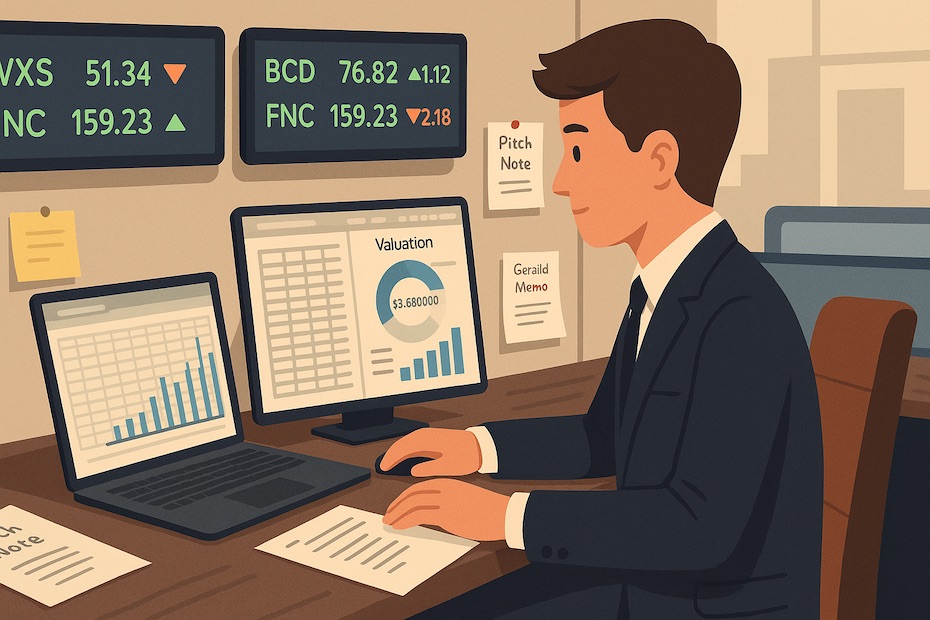
A teenage trading floor experience reveals sharp lessons in risk control, execution speed, and personal accountability.
If you started trading professionally before adulthood, you understand how discipline outpaces theory in finance. This article unpacks what being a teenage trader really teaches—about mistakes, emotional control, precision, and how to thrive in a high-stakes environment.
How chaotic is being a teenage trader on the floor?
It’s fast, noisy, and unforgiving. And it teaches you fast.
Walking onto a trading floor as a teenager is like being dropped into live combat for the mind. You’re tracking tickers, watching spreads shift in real time, and absorbing lingo from traders twice your age. Your margin for error is microscopic, and that pressure demands performance. You can’t hide behind theory when a million-dollar order is moving live in front of you.
The real edge? You learn how fast markets react to news. You understand immediacy. While others simulate in class, you’re seeing how an interest rate change, crude oil dip, or mispriced ETF impacts a room full of professionals. That kind of exposure at 17 builds instincts spreadsheets can’t teach.
What personal traits matter most in early trading?
Execution beats IQ. Your advantage comes from temperament, not talent.
The traders who thrive young aren’t the ones who predict every move. They’re the ones who keep a cool head when a position tanks 5% in 30 minutes. Emotional regulation, not brilliance, separates survivors from stories. You need to respect risk controls, journal trades, review P&L—not chase excitement.
You also develop humility early. When you’re wrong, it’s not theoretical. It’s marked on the screen, in red. If you’re stubborn, you bleed capital. If you adapt, you learn. And if you’re consistent, even the senior partners start listening. Your maturity becomes your resume.
What trading lessons hit hardest at that age?
Process is everything. Discipline saves you from your own ego.
As a young trader, you discover quickly that gut trades are dangerous. Without a repeatable, rules-based system, you’re gambling. The floor teaches you to document entries, define exits, and use stop-loss levels like they’re oxygen. You also learn to detach emotionally from outcomes. A profitable trade isn’t good if it broke your risk parameters.
Failure becomes your tutor. You over-lever once, you remember it. You hold too long during a rate hike, you learn why real-time macro awareness matters. The floor gives you no buffer—just feedback. And that feedback compounds fast when you’re smart enough to listen.
How should you train as a young trader?
Start structured. Build muscle memory before taking big swings.
Simulation platforms like TraderSync or TradeStation are valuable, but they’re not enough. Floor experience adds context. You start by shadowing others, running tickets, sitting through deal memos and client calls. Then, gradually, you take on more: executing micro orders, maintaining your blotter, reporting market color to senior analysts.
Don’t rush to go solo. Instead, refine the basics. Understand order flow, asset classes, volatility profiles, and correlation risks. Read real-world trade recaps. Study your own journaling data. You won’t just trade better—you’ll think like a pro.
Which habits differentiate serious young traders?
High performers track, review, and refine every decision.
You can’t improve what you don’t measure. That’s why elite young traders log every entry and exit with context: market condition, setup, news driver, trade thesis, and outcome. They run weekly reviews, tag trades by strategy, and flag emotional decisions. This rigor builds internal feedback loops stronger than any course.
They also learn when not to trade. Knowing how to sit out, wait, and observe is underrated. Most teenagers get wiped out by overtrading. The disciplined ones know cash is a position—and patience pays dividends.
Habits that define serious teen traders:
- Track every trade with notes on rationale and result
- Use fixed daily risk and stop limits
- Avoid overtrading or revenge trading
- Review weekly stats and refine strategies
- Stay off hype-driven or social media-led plays
How does this early training help long-term?
You build a toolkit most professionals don’t develop until their 30s.
The early floor experience hardwires you to think in probabilities, not opinions. It shifts your focus from outcome to execution. You become immune to panic—because you’ve already watched volatility rip through a desk and lived to tell about it. That resilience becomes your competitive edge in later roles.
It also gives you a head start in pattern recognition. You don’t just read about economic cycles or price reactions—you’ve seen them live, tracked them across markets, and understood how clients positioned for or against them. Those reps compound.
How does floor exposure build career credibility?
Your age stops mattering when your analysis holds up under pressure.
On the floor, you’re judged by accuracy, timing, and communication—not seniority. If you consistently deliver accurate data, price levels, or trade recommendations, senior traders take notice. You learn to speak in terms of risk-reward, not feelings. You report facts, not theories.
Being a teenager who can articulate flow activity, spot sentiment shifts, and stay cool in drawdowns makes you invaluable. You’re not the intern anymore—you’re part of the desk. That builds trust, faster promotions, and often—mentorship from some of the most respected minds in the industry.
Key lessons from teenage trader experience
- Master emotional control under pressure
- Use process and data to guide trades
- Track performance and improve iteratively
- Build credibility through precision, not age
- Learn faster by doing, not just reading
In Conclusion
Starting on the trading floor as a teenager forces you to mature early—because the market doesn’t care about age. You gain execution skills, mental discipline, and a long-term advantage that classroom theory can’t replicate. If you can stay measured, focused, and relentless about improving, those early floor years will shape your entire financial career.
If you’re serious about growing in finance or want a firsthand view into how young traders evolve into leaders, follow this profile. You’ll find real-world commentary, strategic insights, and the kind of perspective that only comes from experience earned—not theorized.